



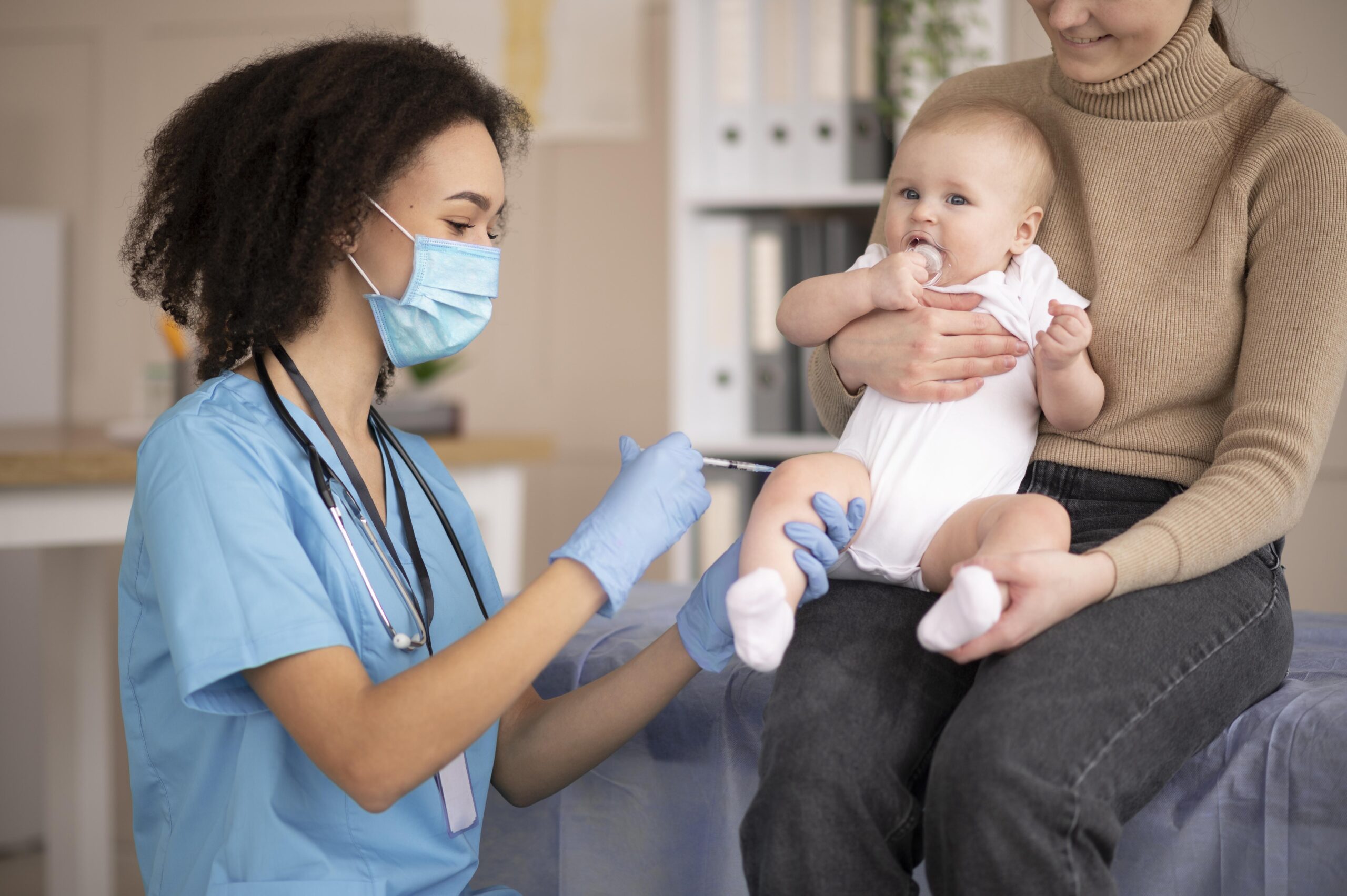
Vaccines are primarily divided into significant stages, such as at birth, 6 weeks, 12 weeks, 14 weeks, months, and so on. At 6 months, the maternal body protects the child from external harm. But after that, the antibodies started to fade away, and that’s when new vaccines were introduced to the baby. Vaccines like MMR are given to the baby.
Your baby started to grow curious, use mobile, and become more socially active. Along with growth, their significant immunization milestones are also upgraded. 4 out of 10 children globally suffer from life-threatening diseases or die before they reach the age of 5. And this is because of neglecting the immunization schedule. Until 6 months, they are most vulnerable, but after that, new threats start to approach them, and some life-threatening diseases are always around them.
That’s why doctors always recommend vaccinating your child on time. Now that your child is 6 months, here are some of the things that you need to keep in mind. This article covers 9-month-old baby vaccines, including important vaccines like MMR and more.
MMR Vaccine – Mandatory
Measles is a significant cause of childhood mortality in India, where a recent study revealed that more than 10% of children die due to this. Measles, Mumps, and Rubella cause fever, rashes, body aches, cough, pneumonia, swollen salivary glands, and joint pain, and this is obviously unbearable for your baby. Vaccination helps keep their immune system immune to these diseases and offers long-term protection from health. Let’s understand the doses also-
First dose (9 months)- MR or MMR-
This initiates a primary immune response and provides a 93%system of protection after a single dose.
Second dose (15-18 months) – MMR Booster-
Approximately 5 to 10% of children’s immune systems do not respond to the first dose. But that does not mean this is a backup. Both doses should be given to the child, and this second shot ensures 98% prevention.
Third dose (4-6 years) – Booster-
This is usually recommended because children enter a new area of transition and come into contact with different people, because you never know how and why your child got infected.
Vitamin A Supplementation – Mandatory
Yes, many parents don’t even know that, but Vitamin A supplement is given to 9 months baby alongside the measles shot. This often protects from nutritional deficiency, reduces mortality from infections like diarrhoea, boosts immunity, fights against measles disease, and ensures long-term health. It is usually stored in the liver and slowly released from there, ensuring 4 to 6 months of protection, as per the WHO. It is given orally rather than by a shot and often paired with MR.
Typhoid Conjugate Vaccine- IAP Recommended
WHO and IAP both suggest that parents vaccinate their child after 6 months, typically between 9 and 12 months. Even IAP also recommends getting your child vaccinated with a booster every 3 years. Its key is to boost the immune system so that the body can fight against serious bacterial infection, typhoid fever, and other health concerns.
Typhoid can be caused by Salmonella typhi, which can be transmitted through contaminated water and food with faecal matter. This vaccine is introduced in a national programme in phases, which defines the importance of the vaccine. Typhoid looks normal, but later in life, it can cause life-threatening diseases like intestinal perforation (holes in the intestine and severe bleeding), encephalopathy (inflammation in the brain), septic shock (blood infection), and myocarditis (inflammation of the heart muscles).
Also, remember that it is contagious, although it cannot pass through casual contact, but there are other sources.
Influenza Vaccine- Optional/ Annual
If the baby is not vaccinated against flu by the time they reach 6 months of age or the fundamental vaccinations have not been administered through double vaccination shots, then administration of this kind of vaccination can take place at the time of the 9-month vaccination. This is because babies tend to develop complications concerning influenza infection, such as febrile seizures, pneumonia, and even the need for hospitalisation. The influenza virus tends to mutate annually, and thus, annual administration of the vaccine is necessary.
Why is measles given in the early years to the baby?
In Western countries, MMR and MR vaccines are given to babies when they are between 12 and 15 months. But in India, it is given in the early stages, because India’s measles exposure risk is substantially higher at earlier ages. Outbreaks occur regularly, especially in urban slums and rural communities, where the vaccine coverage is low. That’s why doctors recommend parents to make sure that their child is vaccinated as per government recommended vaccinations schedule. If they are not properly vaccinated, then they are at higher risk of getting infected due to environmental exposure.
As per the WHO, India has consistently been the top country for measles-related childhood deaths.
In addition, the provision of Vitamin A supplementation with the measles vaccine at the age of 9 months is a well-thought-out strategy because Vitamin A deficiency leads to increased morbidity and mortality in measles, and hence can contribute to lowering morbidity and mortality from measles in vaccinated children.
What if the 9-month vaccine is missed?
Due to travelling, illness, or other reasons, there is a chance that you might have to skip your child’s vaccination. But you don’t have to worry, because there is a simple solution for that. When a baby’s vaccine is missed or skipped, then catch-up vaccination is recommended by the pediatricians.
Options for catch-up vaccine
Catch-up vaccination can be given at any point after 9 months, and even if it is missed, it can be given up to 12 months without altering the subsequent schedule.
The time to administer two doses of the MMR vaccine, with a minimum of 4 weeks of gap, is necessary (for optimal immunity, 6 months is recommended by doctors).
Typhoid and Influenza missed vaccines can be given at the next available opportunity without any loss of efficacy. Like typhoid can be given at any time from 6 months to 4 years. While influenza is an annual shot, which is usually administered between October and November every year in India.
Conclusion
This 9-month vaccination is the defining moment of your child’s immunization journey, because this is where they will receive the first layer of protection against measles. Your baby’s vaccine matters the most, but make sure to take them to a properly maintained clinic, which can not just vaccinate your child, but they can also guide and support your upcoming schedule.
Cradle Children Hospital is the ones who are so eager to provide accurate and reliable information to parents and help them to ensure their child’s health. They are licensed and registered facilities, authentic, ensure to update themselves as well as parents as per IAP guidelines, and make sure proper immunisation records. So, if you are confused or looking for an authentic vaccination centre in Jaipur, then visit Cradle Children Hospital. Not just 9-month vaccinations, further health concerns are their niche.
“A few minutes of discomfort end with decades of protection from diseases that once ended the life of so many babies”.
FAQ’s
Is the MMR vaccine safe for my 9-month-old baby?
Yes, and it has been concluded by many pediatricians all over the world. Common symptoms like fever, pain around the injected site, and decreased appetite are common, and it resolves within 7 to 12 days. But one should not skip their child’s MMR vaccine.
What is the risk of missing the vaccine?
After 9 months, you can get your child vaccinated. But the more you delay, it will keep your child closer to getting infected by a disease or infection. Based on the medical grounds, you can delay the schedule (as per the pediatrician’s recommendation).
Can multiple vaccines be given together at the 9-month visit?
Yes, and it is completely safe. Even doctors recommend co-administering multiple vaccines on the same day, and it will not reduce the effectiveness of each vaccine.
What if my child’s fever doesn’t go down?
If the fever persists, then take your baby to the pediatrician. After checking their health, they will recommend further steps.