



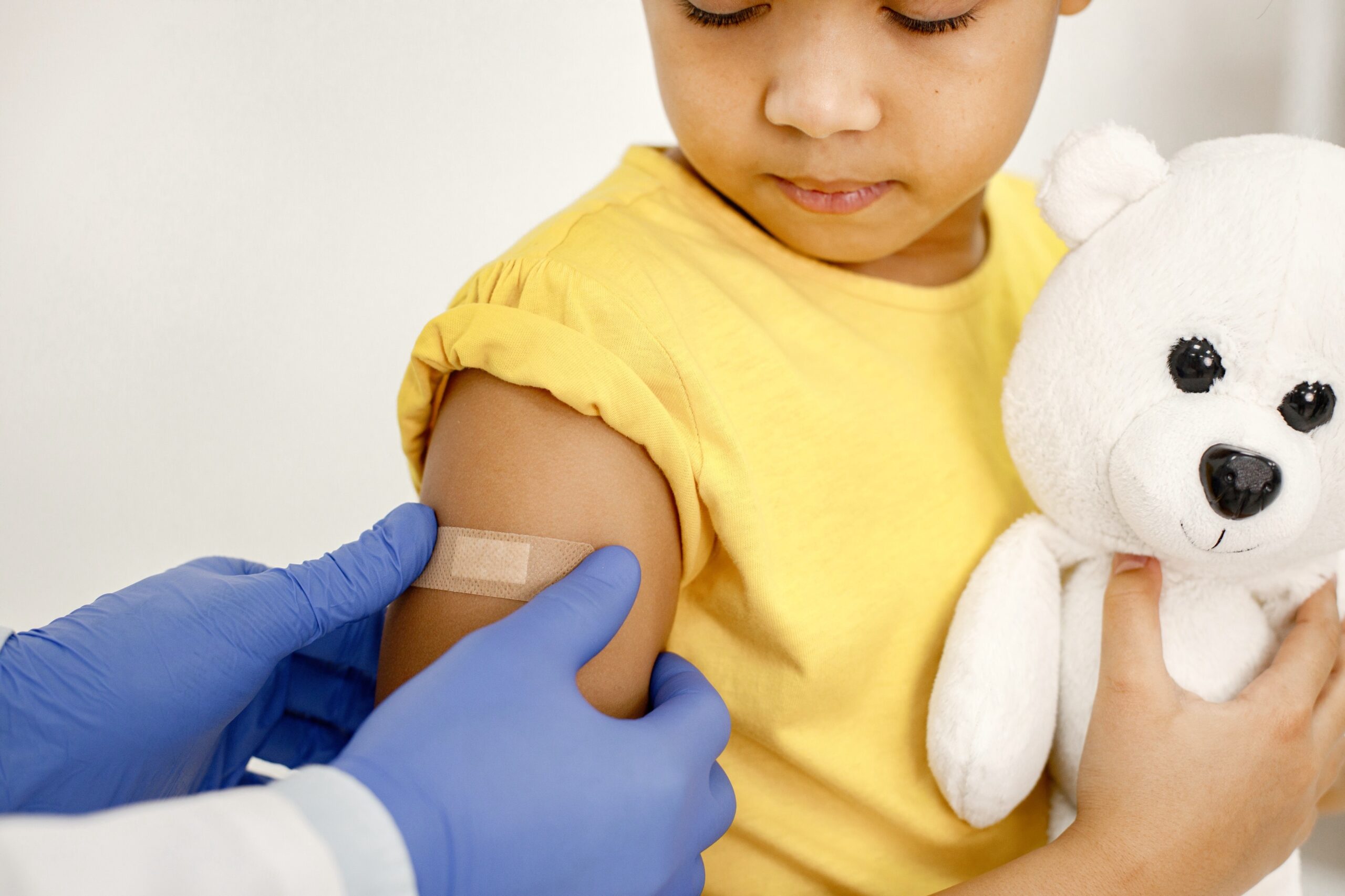
“Vaccination is not just a medical procedure — it is a promise to your child that the diseases of the past will not define their future.”
Both 10 weeks and 14 weeks fall under a somewhat complicated process called the second and third phases of the immunization process, which starts right from 6 weeks of age. Also, it is a scientifically formulated immunization process ranging from age six weeks to adulthood. The purpose behind this is to gradually increase the antibodies in the babies in order to develop immunity against certain diseases.
This combination will safeguard your baby from at least six fatal diseases, which result in very high mortality rates among infants worldwide. According to the UNICEF India and World Health Organization statistics, vaccinating your baby is considered to be the best decision that you could have made in the first year of your baby’s life.
But for these, safe and experienced hands are necessary, which you can get at Cradle Children’s Hospital. The doctors at Cradle Children Hospital make sure to administer all the required IAP vaccines for your baby, ensure comfort, and provide a safe and fully guided process for your baby’s immunization schedule.
This article covers the 10-week and 14-week baby vaccination guide so that no parents can be confused about their child’s vaccination.
10-Week Baby Vaccination Schedule
-
DTaP- second dose
The second shot of the triple antigen vaccine, which provides immunity against three deadly diseases resulting from bacterial infections. Diphtheria causes death because it suffocates the body and leads to cardiac arrest. Tetanus results in excruciating pain owing to muscle spasms. Whooping cough or pertussis is highly fatal to babies as it leads to heavy coughing spells, thus making it hard for the individual to breathe. DTaP vaccine (acellular) is safer than DTwP vaccine (whole cell) but offers equivalent immunity. The former is offered at private clinics, whereas the latter is provided at public health centres.
-
Inactivated Polio Vaccine- 2nd Dose
It’s been more than a decade since India was considered a polio-free country. Even though India eradicated polio in 2014, the disease re-emerged in other neighbouring countries; therefore, mass vaccination is necessary. The second dose of IPV or fIPV (fractionated) provides immunity to all three types of polio viruses. This vaccine demands shots (unlike OPV, which involves oral intake).
-
Hib- 2nd Dose
The second dose of the Hib vaccine helps prevent Haemophilus influenzae type B, which leads to bacterial meningitis (infection of the brain lining), serious pneumonia, epiglottitis (potentially fatal inflammation of the windpipe), and joint infections. This is more prevalent among young children less than five years old. As a result of the inclusion of the Hib vaccine in the Pentavalent vaccine program under the UIP by the Government of India, these vaccines are now provided free of cost to parents.
-
Rotavirus Vaccine- 2nd dose
The second dose of the oral rotavirus vaccine helps provide protection against rotavirus, which is the biggest cause of diarrhoea in kids. It kills about 78,000 infants each year in India. The rotavirus vaccine is easily administered since it requires an oral dosage, and there is no need for any injection here. According to the IAP, two or three doses can be administered according to whether the vaccine belongs to category RV1 or RV5.
-
PCV- dose continuation
The protection against Streptococcus pneumoniae comes from the second dose of PCV, as the bacteria are the main causes of meningitis, severe pneumonia, bloodstream infections, and ear infections. It should be noted that pneumococcal diseases are responsible for 16% of pneumonia cases among children in India. According to the immunisation program adopted by UNICEF India, the two most important doses of PCV are given to infants at six and 14 weeks of age, respectively, with the third dose administered at nine months of age.
-
OPV (Oral Drops)
Along with IPV injections, OPV is also used, and the second dose is administered during the 10-week consultation. IPV and OPV provide immunity since, while IPV provides high immunity in the blood, OPV provides immunity in the intestines. It is essential to emphasise that OPV does not spread the virus because polio has been eradicated in India.
Cost of Vaccine
Government Centre (UIP)- Free
- Pentavalent (DTwP + Hep B + Hib)
- OPV oral drops
- IPV/fIPV injection
- Rotavirus (in select states)
- PCV (in select states)
Private Clinic (Full IAP)
- DTaP / Hexavalent (6-in-1)
- IPV included in combo
- Rotavirus (all brands available)
- PCV (all strains covered)
- Consultation & record update
- ₹3,000–₹7,000
- Cost of 14-week vaccinations- Free
14-Week Baby Vaccination Schedule
-
Hib Vaccine- Third Dose
The third dose of the vaccine will guarantee complete protection against bacterial meningitis as well as any other severe cases of Hib disease in the child. At 15-18 months, your child will receive a booster dose that will give him/her lifelong protection against the bacterium. Children who have received three primary doses of the Hib vaccine will be completely protected against the common bacterium causing meningitis in Indian children, leading to irreversible hearing loss.
-
Rotavirus Vaccine Rotavirus Gastroenteritis
This final dose of the rotavirus vaccine (RV5) could either be a single dose or a double dose in some cases (RV1). This dose of the rotavirus gives your child complete protection against rotavirus since the vaccine has multiple types of the virus covered. Your child is now completely protected from severe rotavirus gastroenteritis in India.
-
DTaP / DTwP- Diphtheria, Tetanus, & Pertussis- 3rd dose
This is the third and final vaccination for the primary series of DTaP/DTwP. This is where your child will have received three initial vaccinations, each separated by four weeks, to build enough antibodies to be protected from all three illnesses. After the immune system creates a memory of this last primary vaccine, it will respond to future boosters, which should be done at 15-18 months and then again at 4-6 years. The effectiveness of three injections against pertussis is above 95%.
-
Inactivated Polio Vaccine
This is the final of three IPV injections or two fractional IPV injections, based on whether you followed a complete or fractional IPV immunisation schedule. Along with OPV oral drops, this primary vaccination helps develop general and specific immunity against all three types of polioviruses. This particular vaccination is particularly important in India because one needs to be constantly vigilant against getting infected by polio.
-
PCV (2nd Primary Dose)
The second dose of the PCV vaccine ensures increased immunity against more than 13 strains of Streptococcus pneumoniae, which are provided immunity through the use of the PCV vaccine. Due to the use of the PCV vaccine, there is a significant decline in cases of pneumonia, meningitis, and ear infection, some common reasons for hospitalisations among Indian infants. Use of the PCV vaccine is recommended by UNICEF India and the IAP immunisation schedule at the 14th week mark.
-
Hepatitis B (3rd Dose)
This third dose of the Hepatitis B vaccine, present in Pentavalent and Hexavalent vaccines, marks the completion of the primary dose of the Hepatitis B vaccine. This gives over 95% immunity against the hepatitis B virus, which, if left untreated, can lead to severe diseases like cirrhosis and even cancer.
Cost of Vaccine
Government centre (UIP)
- Pentavalent 3rd dose
- OPV 3rd dose
- IP/fIPV 2nd dose
- Rotavirus 3rd dose (selected states)
- PCV 2nd dose (selected states)
Private clinic
- Hexavalent (6-in-1) combination
- Rotavirus oral vaccine
- PCV (full strain coverage)
- OPV oral drops
- Consultation & immunisation card update
- ₹3,000–₹7,000
Risks associated With Missing Out on or Putting Off Immunizations
- Just one shot of DTaP offers 70-80% effectiveness; however, with the complete series, the probability of obtaining 95+% effectiveness against whooping cough becomes possible.
- With each passing week that you delay, your kid remains at an extra risk of dying due to potentially deadly diseases like pertussis, which can cause issues like breathing among children younger than 6 months old.
- By putting off the vaccines for your kid, you compromise the idea of herd immunity in your community because infants and those children with compromised immunity who cannot get vaccinations have nowhere else to turn to.
- Catch-up immunizations are effective, but they still mean more visits for your child.
- As per India’s NHM and UIP, these vaccines are imperative to the health of children in India, and this choice is made following disease surveillance within the nation.
Why are boosters crucial at 14 weeks?
First, understand that doses at the 14th week are not just about repetition of previous vaccines; these work to push the immunity to that level that the body is able to handle diseases and infections. With each dose, the immune system started to push its limit and generate antibodies for long-term protection.
Common side-effects of Vaccination
It is completely normal to show some side effects of the vaccine like low-grade fever, fussiness, crying more than usual, drowsiness and increased sleep, mild loose stools, reduction in appetite, redness, and mild swelling on the injected site. Remember, oral vaccines also cause mild symptoms, the same as other vaccines.
But the concern increases when your child starts to show some uncommon signs. High fever than 102 degree F, rashes in different parts of the body, persistent vomiting, seizures, breathing difficulty, and extreme swelling in the injected site.
These are red flags that you are not supposed to ignore. And if your child starts to show any of the signs mentioned above, then do not delay taking them to the doctor.
Conclusion
These vaccinations are not just additional effectiveness for your child’s health, but it ensures that your baby gets their primary protection from deadly microbes prevalent in the past.
Each dose counts! Each visit matters. The only difference between a successful immunization campaign and a partial one depends on the immune condition of your baby – whether your baby is completely or partially immune.
Never miss the 10-week or 14-week vaccination. With the presence of skilled paediatricians, balanced vaccines, and cold-chain management techniques, there is no doubt about giving your baby the most reliable experience of immunization in Cradle Children Hospital.
Cradle Children Hospital promises to give you all the help and expertise to immunize your baby effectively from their first to the last dose. We have expert pediatricians and a guaranteed cold-chain management facility for you here.
Moreover, if you have any queries, not just about the vaccine, feel free to contact us!