




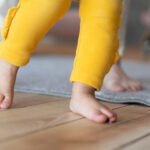
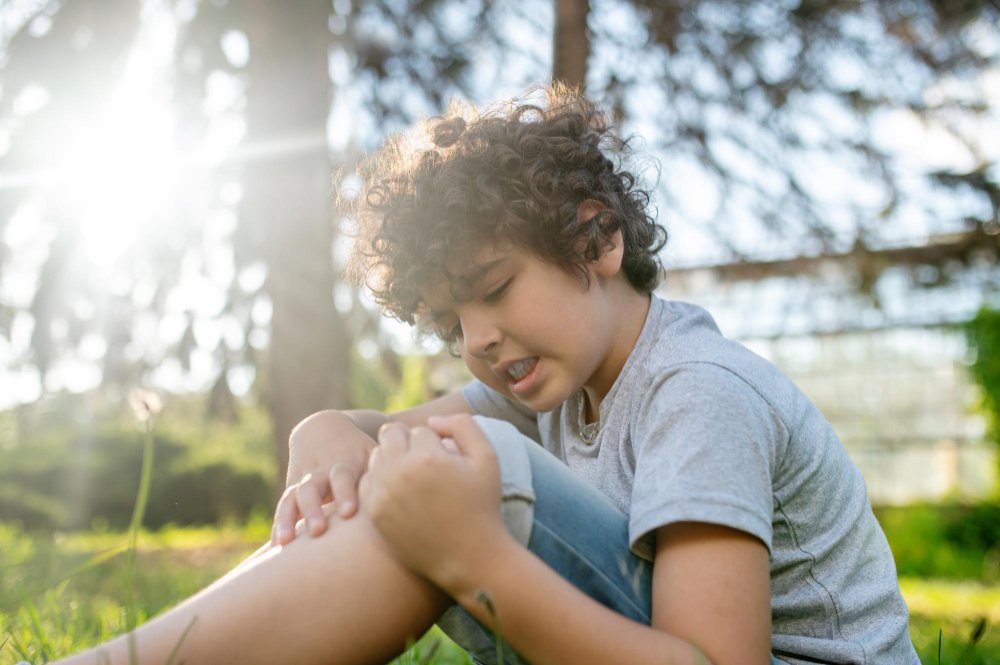
Is your child also standing or walking with knees leaning inwards, and you are confused about whether they are doing it out of habit or if it is a condition that needs your and the doctor’s attention?
Orthopaedics at Cradle Children Hospital is focused on explaining things clearly and calmly, and just like that, you also need to check the condition of your child with patience. Let’s learn everything about knock knees in children, what is normal growth, and what is a problem that is causing this issue.
What is Knock Knee?
It is also called Genu Valgum, where the knees tilt inwards while the ankle in the spaced as they should be. Knock knee are tend to be more common in girls than boys, and this happens because females have wider pelvises and broader hips (also called Q-angle), and this puts more pressure on the knee joint. Around 75% of children under 3 experience knock-knees, and by the age of 7 to 8, this straightens out on its own. Some children’s physiological phase needs treatment, as the condition can become severe and can lead to nutritional issues or fluorosis. In severe cases, it is a sign of underlying metabolic bone diseases due to vitamin D, calcium, or phosphate deficiency, which weaken and soften the bones.
Physiological Variation in Children
In the beginning stage of development, it is normal to have knock knees. As you may have noticed, babies are born with knees inward, or you can say curved legs. As they learn to stand or walk, their legs start to change.
Birth to 18 months- infants usually have physiological bowlegs where knees stay wide apart.
2 years old- by that time, most of the children have daily neutral leg alignment.
3 to 4 years- if their leg alignment is not properly corrected by then, their knock-knees become noticeable, with spaces between the ankles.
7 to 8 years- legs gradually straighten, but if not, then it is called pathologic genu valgum, meaning they have rickets, growth plate injury, joint hypermobility syndrome, bone infection, arthritis, or might have obesity, which is not allowing their leg to be normal.
When is Knock-knee Normal?
There are some of the things that might be normal for your child-
- Your child is in the age group of 2 to 6 years
- The alignment of both legs is similar
- They are not experiencing any pain or limping
- Your child can walk, run, or play normally, and is just unable to stand properly with the knee inward.
When To Worry: Causes of Knock-knee:
1. Normal Growth and Developmental Challenges:
- Childhood alignment:a mild degree of knee inwardness, which typically resolves by the age of 3 to 4. This is a temporary issue and can be improved without any medical intervention.
- Genetics:family background, skeletal dysplasia, metabolic bone diseases inherited from parents, and joint hypermobility condition lke ehler-danlos syndrome can cause this issue. These alter the alignment of the leg and cause a flexible connective tissue problem.
2. Medical Condition:
- Rickets:as we already discussed above, due to a lack of vitamin D, calcium, or phosphatase, weakening of bones happens.
- Injury or trauma:factors on the bones around the knee can damage the growth of the bone’s plate, and this causes misalignment issues.
- Bone or joint infection:infection like osteomyelitis is a serious bacterial infection, and this often starts in the bloodstream and destroys the delicate cells that are responsible for growth. This damages the lower thighbone and upper shinbone.
- Obesity:around 71% of the children with knock-knee are also dealing with obesity. This is a serious indication to parents that it is better to start focusing on your child and make sure they don’t progress towards obesity. Extra weight puts extra pressure on joints, causes gait alterations, and can worsen deformity.
3. In adults:
If a child is not treated on time, they might carry this issue into adulthood as well. And you know what, it can cause wear and tear on the outer part of the knee joint, imbalance the muscles, or cause ligament laxity. Almost 10% of adults are dealing with problems in their lives, and all because their parents did not focus on them in time.
4. Nutritional deficiency:
Yes, due to lack of not getting proper nutrition, your child may experience this issue in their life. That is why pediatricians at Cradle Children Hospital always recommend parents focus on their child’s diet, so that they don’t have to faced challenged in their life.
Symptoms of Knock-knee:
- Ankles remain apart when knees are touching
- Walking pattern is unusual
- Outwards rotated feet
- Symmetric inward angle of the knees
- Gap between the ankles is more than 8cm
- Only one leg is affected
- Your child is short and overweight
- Pain in both knees when touching each other
- Swelling, stiffness in one or both knees, or feeling warm to the touch
As a parent, What you need to know?
First, understand whether your child is standing properly or not, and if they are not, start noticing the pattern. Don’t try to force their knee just because you want your child to have symmetric legs. A child physiotherapist is the only one who can help you through medication, physiotherapy, and some suggested home exercises. Indulge those exercises at home as well, so that they can become habitual in the practice, and do not bother when it is done by the doctor.
Secondly, if you are confused about whom to contact and how to know whether you need to worry or not, then Cradle Children Hospital is the one that can help you through legit information. Not just about knock-knees, you can contact our pediatrician if you have any concerns about your child. So, don’t wait, and book the consultation today.
FAQ’s
Do special shoes or insoles help?
No, they don’t help. Instead, it is better to let your child get comfortable with normal shoes, let them play barefoot, and let them make movements.
When braces are required in knock knee issues?
In severe cases, braces are recommended by doctors. Braces are like a metal plate that is used to align the leg in a proper manner.
When is surgery required?
When your child gets older and is still unable to improve the alignment of their leg, the pain is severe, their growth correction has not worked, and they have functional difficulties.
How long does it take to improve a knock-knee issue?
No two children are the same, and it does not follow the same pattern. But it takes somewhere between 7 and 8 years to improve the issue.