



YES!
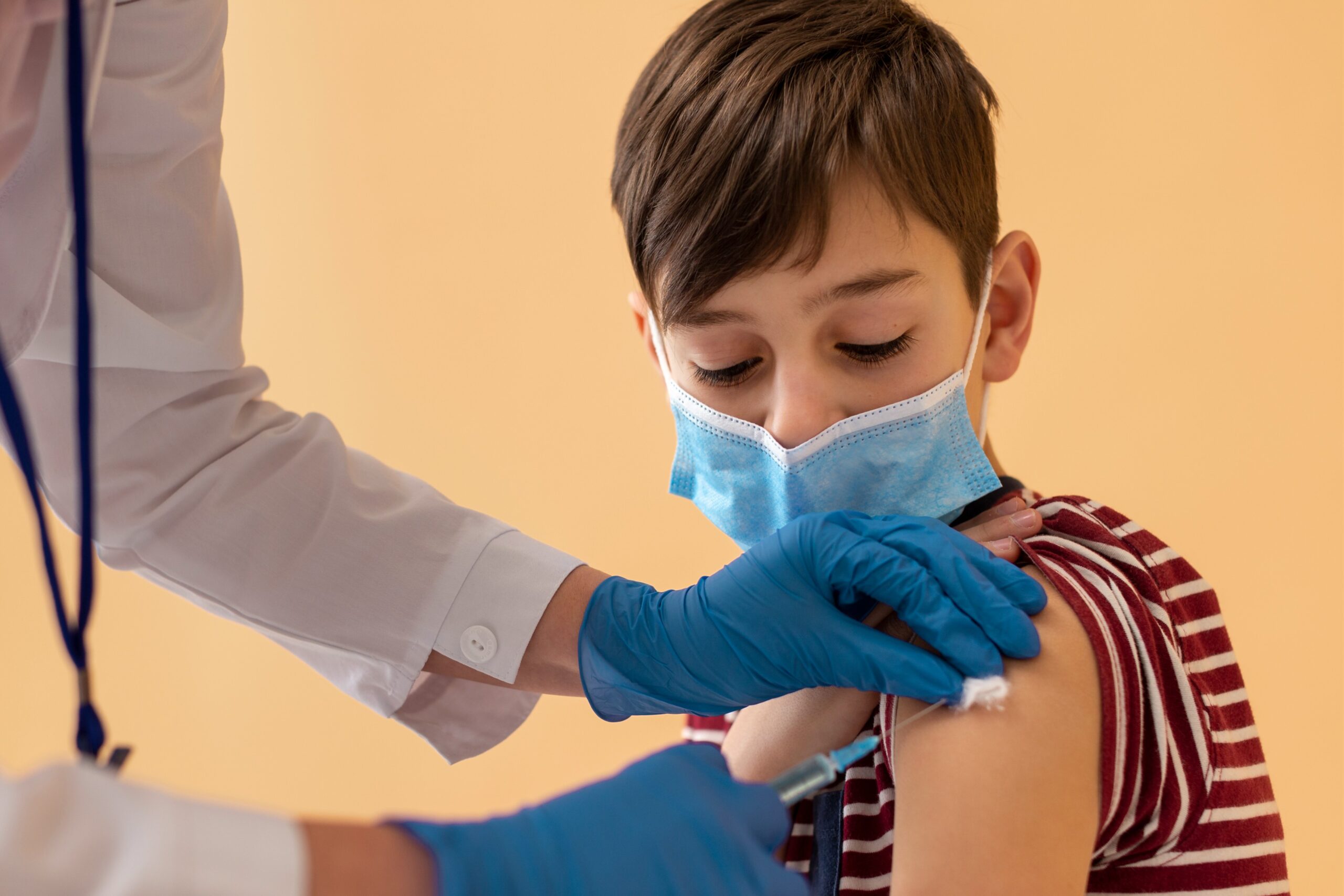
It is safe, and over the last several decades, the number of vaccines given to children has increased. If every child were given a vaccine separately, they would have to receive a large number of injections. That is why a combination of multiple vaccines has been widely suggested by paediatricians, and it is also accepted by the WHO.
But even after knowing the answer, most of the parents hesitate to do it go for it. So, let’s understand, can vaccines be given together, and is it safe for your child?
Why are multiple vaccines given at the same time?
The modern immunization schedule is designed to protect children against threatful infection and diseases that can cause them physical challenges, leading to unbearable issues. Parents should not waste time or delay their child’s vaccination schedule. But one thing always comes to mind for parents: what if they miss their baby’s vaccine? What are the possibilities?
Apart from catch-up vaccination, paediatricians also recommend going for multiple vaccines in one visit.
How does your child’s immune system work?
The purpose of the multiple vaccines in a single visit is to cover the immunization schedule and save the time of the parents. But, some also thought about that, does this process provide the same protection as a single shot?
Yes, it does.
More than a single shot in a single visit does not mean that the effectiveness of the vaccine has reduced. It builds the immune system similar to a single one. And also, remember, it does not mean that your child will show more symptoms than usual. It will show similar signs like mild fever, little redness on the injected site, soreness, and a little drop in appetite (because of the fever).
Also, your baby’s body handles thousands of exposures to viruses and bacteria daily. This is like a training ground for them, where their immune system is getting prepared for bigger issues. But for the first 6 months, the maternal immune system helps to protect them, and after that, it gradually reduces. So, if their body can handle thousands of germs and bacteria in one day, their body can easily adapt to the immune response created by multiple vaccines in a single visit.
- Strong immune response- each vaccine triggers distinct, effective antibodies which response like a usual way even when given together. It makes their immune system stronger, not less effective.
- Fewer clinic visits- a combination vaccination schedule reduces your clinic visits, which saves time and energy. And also, your child doesn’t have to bear fever, pain, and that experience again and again.
- Rigorous testing- after thorough testing and analysis, pediatricians have recommended multiple vaccines for children.
But if your child is suffering from some disease, infection, health concern, or is going through some specific treatment, then make sure to inform the doctor. After analysing their report, the further process is recommended by them.
How do you know vaccines are safe?
Before the vaccines are approved for children, the Central Drugs Standard Control Organization (CDSCO) conducts safety testing. Also, an essential step is also processed called “Concomitant use study”. As per, they also test the vaccine with other vaccines which are usually given to children, and analyse all the possibilities (including positive and negative effects), and then approve it for children. Once the vaccines are approved, they will release the list of immunization shots that can be given to children or babies.
Common combination of vaccines
| Age | Vaccines | Protected Against |
| At birth | BCG + OPV + Hepatitis B | Tuberculosis (TB), Polio, and Hepatitis B |
| 6 weeks | DTwP + IPV + HiB + Hepatitis B + Rotavirus + PCV | Hepatitis B, Diphtheria, Tetanus, Polio, Hib, Rotavirus, Pneumococcal |
| 10 weeks | DTwP + IPV + HiB + Rotavirus + PCV | 2nd dose |
| 14 weeks | DTwP + IPV + HiB + Hepatitis B + Rotavirus + PCV | Full series |
| 9 to 12 months | MMR + Varicella + Typhoid | Measles, Mumps, Rubella, Chickenpox, Typhoid |
| 15 to 18 months | DTwP booster + IPV boosster + HiB + MMR 2nd dose + Varicella 2nd dose | Booster |
| PCV (select districts) | 6, 14 weeks & 9 months | Pneumococcal Pneumonia |
What does Cradle Children’s Hospital recommend?
At Cradle Children Hospital, the paediatricians follow the standard based on the Indian Academy of Pediatrics (IAP) schedule and WHO guidelines. Here, we used only pre-qualified, cold-chain maintained vaccines and ensured to maintain digital immunisation records, so that you don’t have to face the issue of missing vaccines.
Can a newborn get multiple vaccines?
Yes, even infants can safely get multiple vaccines in a single visit. Their bodies are capable of handling thousands of antigens. At birth, BCG, a dose of Hepatitis B, and oral polio are given routinely together. Cradle Children Hospital’s neonatology team ensures that babies receive the vaccine with care to maximise protection.
What vaccines should not be given together?
Oral Polio Vaccine (OPV) and Rotavirus Vaccines should not be given together, as it results in lower immune response due to the rotavirus vaccines. However, according to studies, if the scheduled vaccines are given on time, they can be given simultaneously without affecting their efficacy.
MMR, Varicella, and Yellow fever (live vaccines) can be given together, but if not, then make sure that your child receives these shots separately by at least 4 weeks. Some studies also point out that combining these can diminish the antibodies that respond to the immunisation shot.
PCV13 (Pneumococcal Conjugate) and MCV4 (Meningococcal Conjugate) should not be administered simultaneously. It can potentially interfere with the efficacy, especially for those children who are dealing with a specific disease or illness.
Conclusion
Should a child get multiple vaccines in a single visit or not? This question is a little sceptical for parents. But as per experts and several studies, it is completely safe for your child to get multiple vaccines in a single visit. It removes the unnecessary visits, and also helps you to keep them updated as per the immunisation schedule. But there are several vaccines like OPV, Rotavirus, MMR, Varicella, Yellow fever, and MCV4 and PCV13 that should not be given together.
Moreover, Cradle Children Hospital makes sure that every child receives the vaccine according to their immune capability. They prefer to communicate with parents before the vaccine, so that they can keep their child safe. Apart from that, if you have any queries related to your child, then contact Cradle Children’s Hospital.
Nothing is better than keeping your child protected!
FAQ’s
Can multiple vaccines be given to every child?
If a child is not dealing with any health condition or undergoing any specific treatment, they can receive multiple vaccines in a single visit. At Cradle Children Hospital, pediatricians ensure that the child is getting optimal care for maximum protection.
Can a vaccine be given to a sick child?
Mild fever, cold, or cough are no reasons to delay the vaccination schedule, but it is safe to talk to the doctor prior to the shot. If they suggest, you can delay the schedule.
What if multiple vaccines overload my baby’s immune system?
There is no such thing as an immune system overload. Your baby’s immune system is capable enough to handle multiple shots in a single visit, because their body’s already dealing with thousands of infections and viruses.
What are the benefits of giving vaccines together?
Fewer clinic visits, better compliance with vaccination schedule, less stress, timely protection, and you don’t have to see yourself being sick because of vaccination again and again.
In what conditions should I avoid multiple vaccines for my baby?
If they have a history of severe allergic reactions, your child is ill, or they have undergone a specific treatment. In such conditions, make sure to talk to the pediatrician, communicate all the necessary information, so that based on the health condition, they can guide you about the vaccine.