




What is Pediatric Physiotherapy?
Pediatric physiotherapy is defined as the process of using exercises that are especially made for kids, which can be defined by concerns such as weakness, coordination, balance, posture, and motor skills problems. Pediatric physiotherapy is distinct from adult physiotherapy in that, whereas adult physiotherapy attempts to solve the problem of movement, pediatric physiotherapy works towards the development of the child in a certain developmental period.
While adult physiotherapy attempts to solve movement problems, pediatric physiotherapy aims to ensure that the child is able to carry out daily activities such as playing, running, climbing stairs, sitting all day long at school, and playing with other children.
How Does Pediatric Physiotherapy Differ from Adult Physiotherapy?
| Factors | Pediatric Physiotherapy | Adult Physiotherapy |
| Primary focus | Supporting physical development, coordination, movement, and even functional development in children | Majorly focusing on restoring movements, improving strength, reducing pain and maintaining physical function. |
| Age | Infants, toddlers, children and adolescents | Adults and older people |
| Conditions treated | Cerebral palsy, developmental delays, muscle disorders, congenital conditions, coordination and balance difficulties, and motor delay | Back and neck pain, rehabilitation after surgery, neurological conditions, fractures, sports injuries and even age-related mobility problems |
| Developmental goals | Include milestone which children should reach based on age and improve coordination. | Focus on regaining and maintaining abilities. |
| Treatment approach | Using play-based activities so that the child can adapt easily and make progress | Use structured exercises always: manual therapy, strengthening, stretching and functional training. |
| Goal of the treatment | Develop age-based movement skills | Restore function, and manage symptoms |
Conditions Treated by Physiotherapy
- Neonatal Torticollis – Torticollis in newborn children has been recorded by many parents. This is a condition whereby there is stiffness of the neck muscles causing tilting of the head of the newborn. This helps to provide 90% to 99% success through different exercises.
- Hypotonia babies or low muscle tone babies – babies who lack muscle control, because the muscle feet are soft and limp at rest, and this is usually called floppy baby syndrome.
- Developmental Delay – late sitting, crawling and walking developmental milestones are some of the important skills that children should develop. This impacts motor skills, speech delay, balance, movement and many more.
- Toe walking in children – children who walk on their toes beyond the toddler age, and it basically happens due to short tendons and tight calf muscles. If your child is not walking even after 18 months old, then it is a sign. Also, children with autism spectrum disorder tend to face this type of challenge more.
- Cerebral palsy – due to abnormal brain development and early brain damage, cerebral palsy impacts children, and through therapy, therapists help children to control muscle tone, improve balance and enhance joint flexibility. Physiotherapy for children with cerebral palsy is proven to be effective.
- Down’s syndrome – where there is development of motor skills, where the baby has poor muscle tone and delayed motor skills development.
- Orthopaedic disorders – including disorders like club foot, hip dysplasia and rehabilitation after bone fractures.
- Rehabilitation after surgical procedures – the major focus is to improve joint movement and strength restoration.
- Developmental Coordination Disorder (dyspraxia) – associated with challenges in balance maintenance and motor planning in activities of daily living.
- Gait disorders- uneven, stiff, and also asymmetric walking patterns.
Milestone-based Warning Signs That Parents Should not Ignore
Newborn (0 to 3 months)
- Consistently, their head is tilted to one side, or they are turning their head both ways, and it can be a sign of torticollis.
- Noticeable stiffness or floppiness in their legs and arms
- Little to no control over their head even though they are 4 months old.
Infant (4 to 12 months)
- Unable to sit without any support by the age of 8 to 9 months
- Using only one side of the body more than others
- Not rolling by 6 months
- By 10 months, they are unable to bear weight on legs
Toddlers (12 to 24 months)
- If your child is not walking even though they are 1.5 years old, this is the biggest sign that you need to visit a child physiotherapist.
- If a child is continuously walking for 2 years, then this is a significant sign of some challenges.
- Symmetrical, floppiness and stiffness in movement
- Frequent falling
Preschool (2 to 8 years)
- At this age, when most of the children play and indulge in physical activities, if the child is continuously avoiding running, jumping, or climbing, then this is a sign.
- Unusual or uneven gait when running or walking
- Poor balance, bumping into objects, and frequent tripping
- Slouched posture which is not improving over time
- Getting tired during physical activities compared to other children
What Does a Pediatric Physiotherapy Session Look Like?
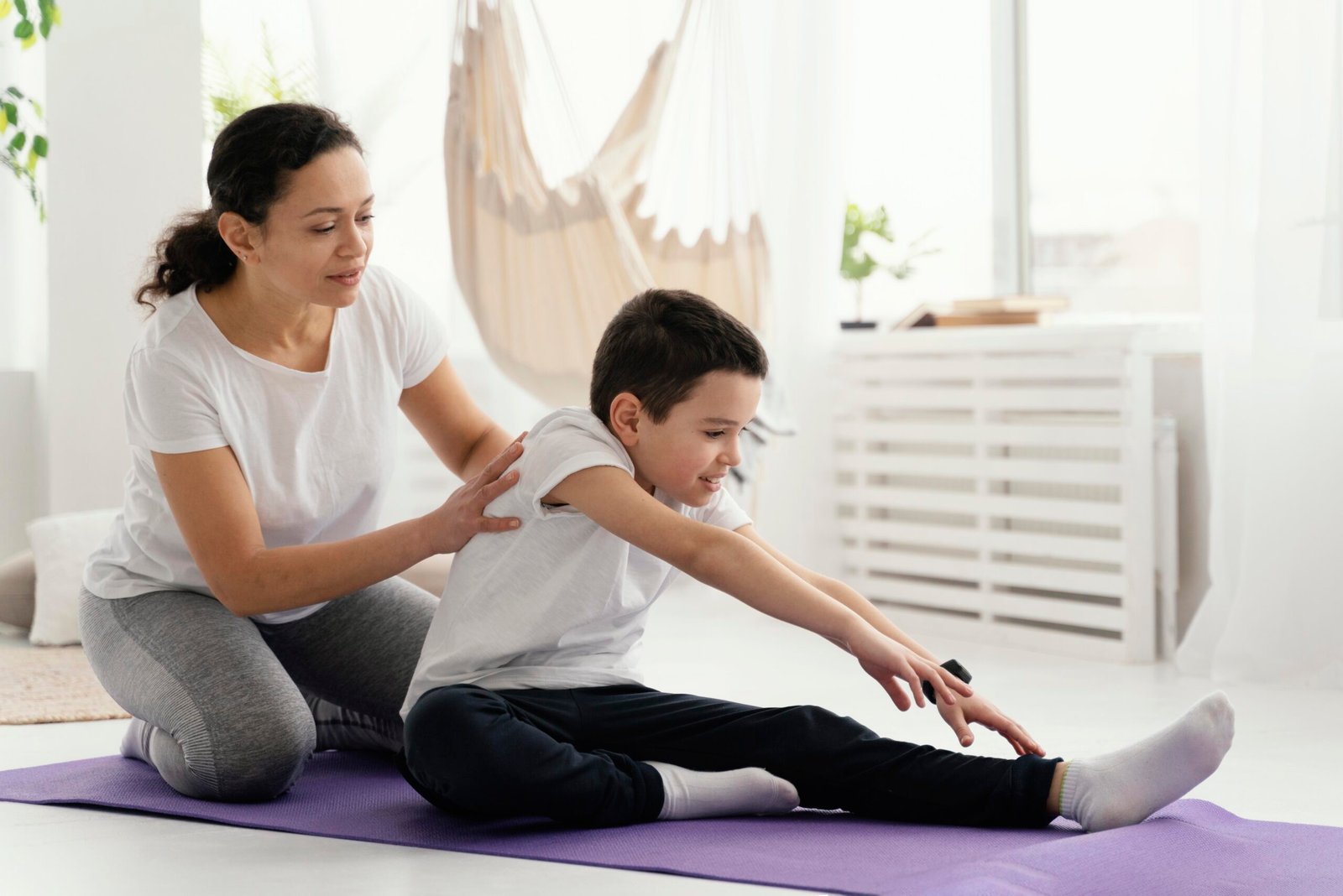
For most of the children, the session looks like a play exercise, and the therapist uses games and equipment to make exercise entertaining. A typical session may include-
- Stretching activities- this uses body weight, play-based tasks and weight resistance, which help to build core strength and overall muscle function.
- Gait training- this is for those children who are dealing with walking difficulties, and physiotherapists basically work on stride pattern, foot placement, endurance and posture.
- Balance and coordination- activities are done to help children maintain stable postures and coordinated movements.
- Gross motor skills development- through movements like crawling, rolling, running and jumping, that too in a structured and supportive environment.
- Stretching and flexibility- this is to address muscle tightness and contractures, so that the child can overcome the challenges of limited movement and discomfort.
- Home session- during physiotherapy sessions, parents are also instructed properly so that they can perform those activities at home. This speeds up the progress and also makes your child habitual of those practices, overcoming challenges.
Signs That Your Child Might Need an Assessment
- Your child is not meeting gross motor milestones
- Walking on tiptoes, even though they passed age 2 or 3
- Avoid doing physical play and become much less active
- Fall easily and struggle to even balance themselves
- If they are recovering from surgery
- Trouble with unusual walking pattern
- Has noticeable low muscle tone
- Tire easily while playing
Conclusion
Pediatric physiotherapy is not for children who are under rehabilitation after surgery. This point is needed because this is what most of the parents think. They not only help your child to overcome physical challenges, but this therapy also helps them to gain confidence. When they are unable to walk, dealing with an unusual walk, have low muscle tone, or other conditions like cerebral palsy or autism, a pediatric physiotherapist can help your child.
And if you are wondering whom to contact who can actually help your child, then contact Cradle Children Hospital. Book your consultation today!
FAQ’s
What is the difference between pediatric physiotherapy and adult physiotherapy?
The difference is that in pediatric physiotherapy, there is development of new skills, playing instead of physical exercises, and parents as co-practitioners, whereas in adult physiotherapy, there is restoration of lost skills.
Can I be concerned if my baby will not be able to walk when he is 18 months old?
It is better to check it with the physiotherapist or paediatrician because it is considered to be a delay in walking and there are no other abnormalities.
Is it alarming if my kid walks on his toes?
It is not alarming now because sometimes it happens and the kid tries to develop his motor skills. However, if they are constantly walking on their toes only, then it is concerning.
What can be the reason for low muscle tone in babies?
Low muscle tone can appear due to different causes, such as prematurity, disease, or unknown reasons in most cases. It can be detected by physiotherapy.
How long does the physiotherapy take place in a child with cerebral palsy?
It is a regular therapy, and its purpose depends on the age of the kid. Physiotherapy helps to develop motor skills of the child.
Is there a possibility to cure torticollis without surgery in babies?
Yes, it is possible to treat torticollis with the help of physiotherapy and exercises if started in a timely manner.
How many times should my child visit a physiotherapist per week?
It depends on the health status of the child. Usually, the child visits 1-3 times a week and practices the exercises at home.
Should I do exercises at home despite the fact that my child visits the physiotherapist?
Yes, it is a very important part of the therapy since exercises done at home become the main success factor. This will help to speed up the progress.