





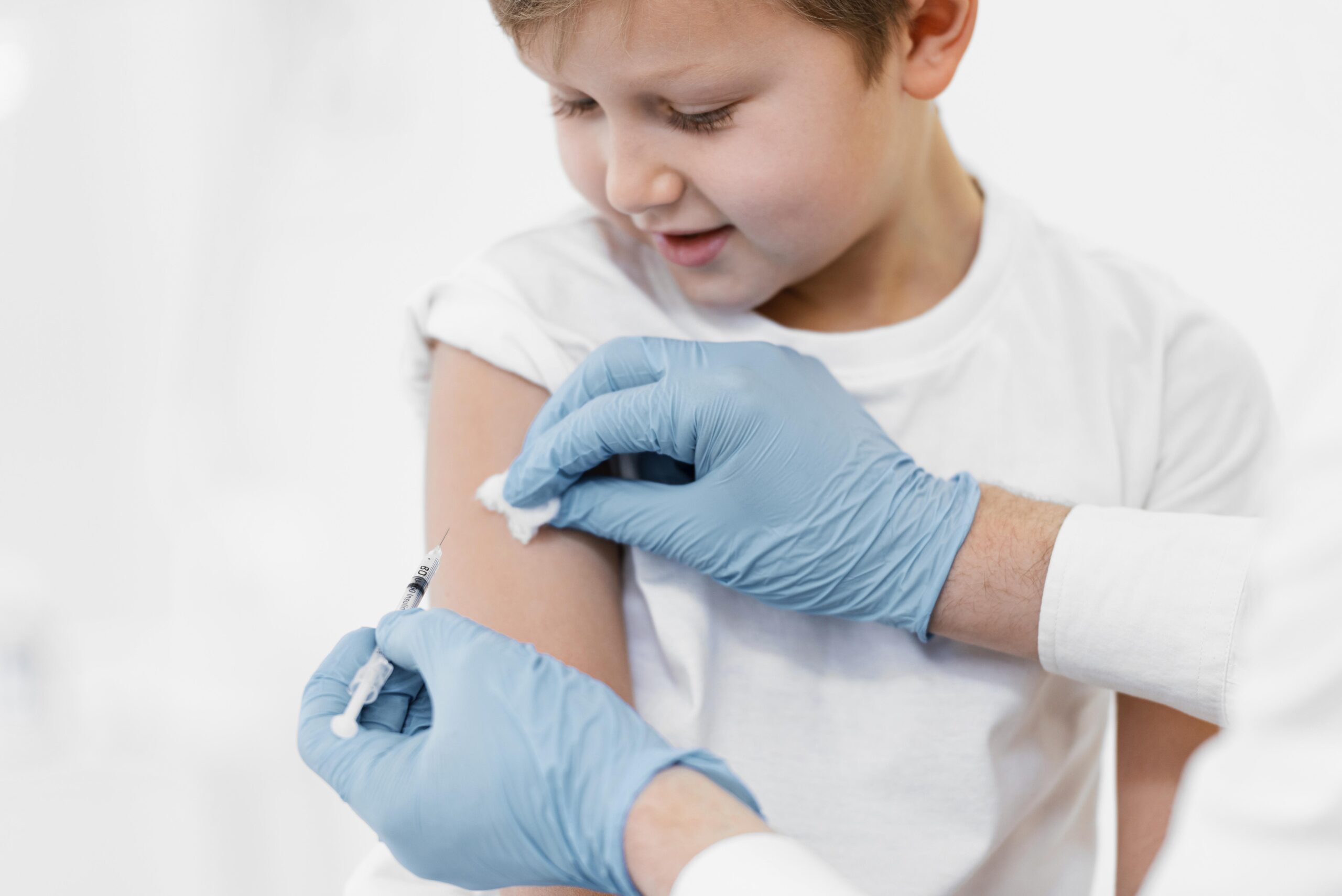
Vaccines provide 90% of protection against targeted diseases, not 100%, remember that. From birth, infants are most vulnerable to contracting infections and diseases because their immune system is still developing. And as they are born, their bodies are not known to any foreign agents. Just after their birth, some vaccines are injected to ensure immediate protection.
But seeing the baby developing a fever after the vaccine can be stressful for parents, as they don’t want their children to get sick.
This article will make you understand the side effects of baby vaccines, what is normal, and what is not.
How Does Your Baby’s Vaccine Work?
A vaccine is induced with a harmless part of the germ, and this is introduced to the body through injection. Don’t worry, this will not impact your baby’s body, as this is just to help their immune system recognise the disease, so that when the actual disease hits, the immune system can respond and fight against it.
What is Normal?
1. Common Side Effects
Fever
As the body is responding to the foreign agent, the fever appears to be normal. And within 2 to 3 days, the fever goes away. This happens because the body actively produces the protective antibodies.
Mild Swelling and Redness
We all know that mild swelling and redness around the injected area is common, and sometimes the skin around the area also becomes tight, which disappears over a couple of days. You can use a damp hot towel to ease the pain and swelling.
Sleeping Trouble
Some children are fussy as they cry more due to pain. Also, this can cause some disturbance in their sleeping patterns. It may also impact their appetite. Some vaccines, like MMR, show signs after 5 to 10 days of vaccination. So, don’t panic; instead, talk to a doctor.
2. Less Common But Mild Reaction
- Due to some of the oral vaccines, some children vomit or suffer from diarrhoea along with a low-grade fever.
- Longer sleeping hours, feeling more tired and irritated, are also signs that their body reacts more than usual. But this is nothing to worry about. As they feel tired due to fever, their sleeping hours might increase.
What Is Not Normal?
Rare Side Effects
Out of a thousand children, the vaccine negatively reacts to one child, and this is considered a rare condition. This happens because their body is more sensitive to some component that triggers issues in the body. Anaphylaxis is one of the rare and severe allergic reactions, where children suffer from difficulty breathing and swelling. As soon as the vaccine hits the body, the reaction develops. The symptoms include rapid heartbeat, extreme weakness, bluish skin, swelling on the face, and wheezing.
The rarest of the rare cases include seizures, and this happens because of a high fever. Mostly, MMR or inactivated vaccines are known for such symptoms in children. This also happens because of the genetic disposition. So, if you have a family history of similar cases, then it is best to communicate with a paediatrician.
NOTE: It is acceptable that vaccines can trigger some challenges, but they do not cause chronic disorders, and can be treated with the right guidance.
Conclusion
It is completely natural to feel concerned about your child’s health. Fortunately, most of the symptoms are common reactions responding to the body’s immune system process. After a thorough analysis and after monitoring the possibility, the vaccines are approved for use in children. But as a parent, you need to stay informed and understand what is normal and what is not. But that doesn’t mean you should keep delaying your child’s vaccination schedule because of fear.
Rather, it is better to talk to Cradle Children’s Hospital and understand the concept of vaccination and why it is necessary, because long-term health issues can be easily minimised by vaccinations.
At Cradle Children’s Hospital, our team is always here to support parents through every process of their baby’s health journey. So, book your consultation today and uplift your child’s health.
FAQ’s
Should I Worry If the Injected Site Gets Swollen?
Although it happens in every child, if the swelling worsens after 48 hours, then seek medical advice.
Is It Safe To Vaccinate My Child If They Have Cold Symptoms?
In most cases, yes, you can. A mild illness is not a contraindication, but it is necessary to consult a doctor.
Can I Delay The Vaccine To Reduce Side Effects?
It is important to understand that delaying makes them vulnerable to diseases, and you are pushing them away from preventing infection and disease, as per the WHO.
Can My Baby Handle More Than Two Vaccines on The Same Day?
Our body fights against multiple germs and bacteria at the same time, and it makes itself stronger to handle the dose of vaccines.
What should I do if I Detect Side Effects In My Child?
First, analyse the symptoms. If these are common signs like fever, mild redness, and swelling in the area, then it is common. But if your child started to have breathing issues or other signs, then take them to the doctor.
If My Baby Is Premature, Can They Still Have A Vaccination?
Yes. premature babies are often at greater risk of getting impacted by disease or infection. Even doctors recommend vaccinating them to protect them from a harmful environment.