




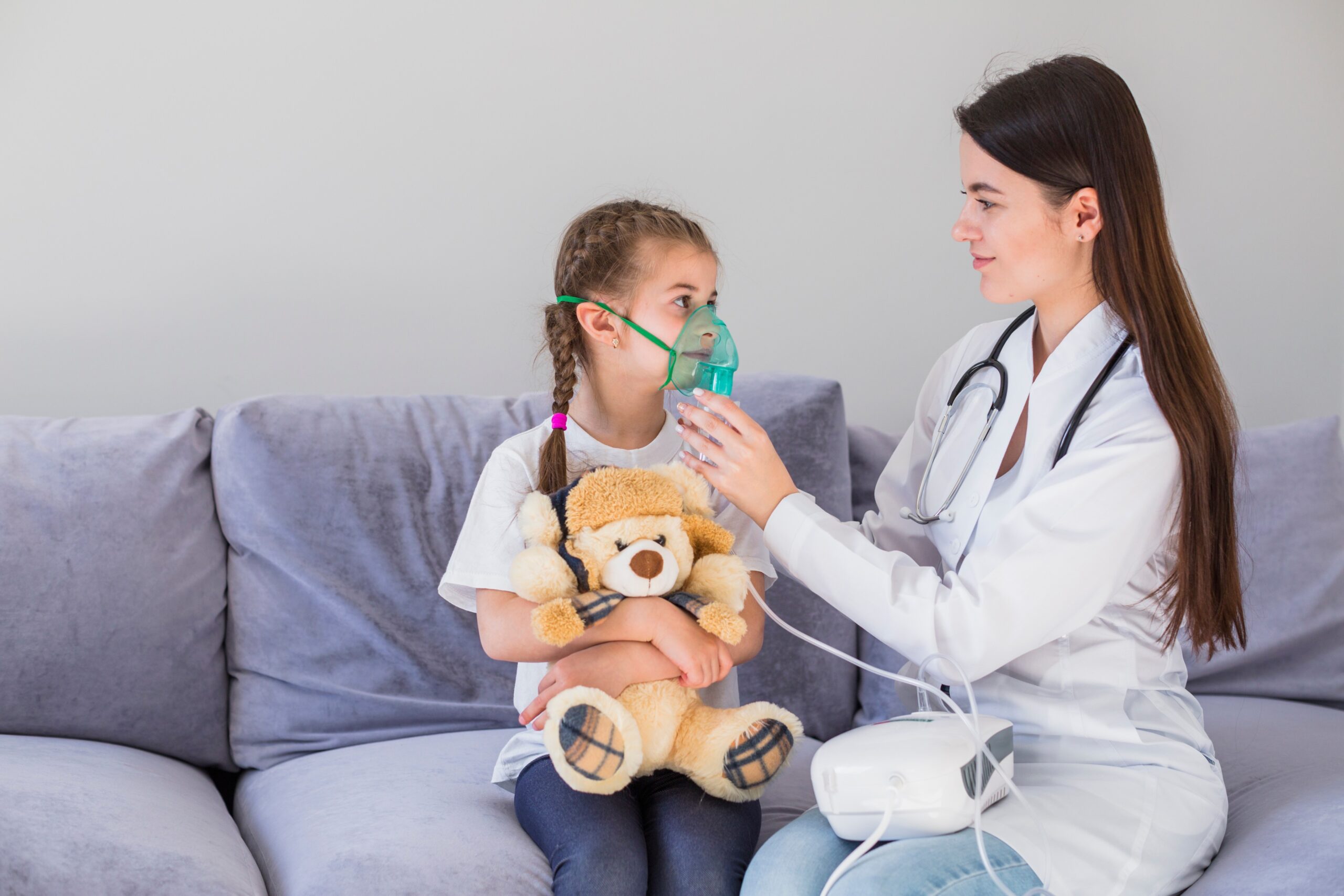
Approximately 7.9% of children suffer from asthma, of whom 35% are under 0 to 5 years, 4.9% are 6 to 13 years, 13.1% are 11 to 16 years, and 6.1% are 13 to 14 years. It is frightening to see children coughing and wheezing frequently. Fall or autumn is the season in which asthma triggers are most common, and this is the time when parents need to focus more on protecting children.
This guide is for you to understand every aspect of asthma, because early diagnosis and management can improve your daily life and help you live easily.
What is Childhood Asthma?
It is a chronic condition that impacts the airways in the lungs and causes them to become inflamed, narrowed, and to produce more mucus. This causes challenges in breathing, along with wheezing, coughing, and breathlessness. Sometimes, parents mistake asthma symptoms for chest infections or seasonal allergies, which can delay the diagnosis, leading to increased risk.
Early Signs of Asthma in Children
Asthma can come with unannounced signs, which can make it difficult for parents to understand it properly.
- Persistent or recurrent cough: in the early morning or at night, a dry cough can worsen the situation due to the natural biological clock. Drop in anti-inflammatory hormones, dust and mites, and the physical effects of lying flat can trigger coughing and chest tightness.
- Breathlessness: while playing or indulging in activities that require stamina, if your child starts to breathe heavily, then this is a sign. Although heavy breathing is common, if it happens with chest tightness, coughing, and wheezing, and does not improve within 5 to 10 minutes, then this is a sign. It might have happened because of dust, but it is advised to take your child to the doctor.
- Fatigue: one of the distinctive features of childhood asthma is that children experience getting tired more quickly than their peers during physical activities like playing, participating in sports games, or running up the stairs. In most cases, one can observe how a child refuses to play cricket for several minutes, falls behind during the bicycle trip, and keeps asking for pauses when the others are still active. This happens because of the narrowed breathing tubes that lead to poor oxygenation during physical activities.
- Chest infection: It is rather easy to distinguish the symptoms of asthma among children since it is possible to notice how often children fall sick with bronchitis, chest infection, or common chest cold in a recurrent manner. However, what distinguishes this disease from other childhood diseases is the recurrent nature of the disease, which appears regularly every couple of weeks or months, depending on some factors like a dusty environment or a change in temperature after recovering from a viral cold.
- Disturbed sleep: this is because being in the lying position leads to irritation of the airways and accumulation of mucus, making it hard for them to breathe. Persistent coughing at night without a common cold is a warning sign; this is because it has an effect on your child’s mood, concentration, and growth.
- Making an effort to even breathe properly: it is a vital symptom because it is an indication that the condition has advanced. Be wary of your child’s nostrils flaring up every time they breathe because it is a signal that your child is struggling to breathe. Also, be wary of your child’s skin being sucked in every time they breathe in around the chest, ribs, neck, and collarbone. When your child breathes rapidly and gradually rather than slowly and steadily, then it is a warning sign.
A common trigger of asthma in children
Identifying the allergens causing asthma in your child becomes easy when you are aware of what they are. The following are some of the most common allergens:
- Dust and Pollution, due to the arid climate of Jaipur and pollution caused by building construction, form a good chunk of the allergens in places where there is heavy traffic
- Pollens, during the onset of the spring season and also the monsoon
- Temperature change: rapid changes in temperature caused by the weather in Jaipur, particularly in winter.
- Smoke- smoke emanating from vehicles, agarbatti, or even secondhand smoke from cigarettes
- Virus- cold or fever usually worsens asthma
- Pet dander and Mould- if any pets are present
- Any strong odor, from perfumes or other things like cleaning agents and cooking
- Physical exertion- in some cases, allergens might cause asthma attacks only if the person is physically active
Diagnosis of Childhood Asthma
Childhood asthma is especially hard to diagnose since a kid cannot perform breathing tests normally. Here are some methods used by a pediatrician for diagnosing childhood asthma:
- Detailed medical history, including frequency, timing, and triggering factors of coughing and wheezing
- Physical examination: for listening to wheezing sounds from the chest
- Family medical history review: asthma, allergies, and eczema in relatives
- Spirometry– in case a child can conduct breathing tests, usually at 5-6 years old
- Allergen tests, if required, to detect allergens that trigger allergic reactions
- Trial of treatment: Physicians may understand how the condition reacts to asthma medications
Conclusion
Accurate diagnosis ensures you will have the proper treatment regimen for your kid, rather than useless antibiotic therapy. At first sight, childhood asthma might appear as quite a scary ordeal for parents because some of its signs might mistakenly be considered just frequent colds or seasonal weakness in kids. However, identifying the early signs of asthma will enable you to secure timely medical assistance for your child.
Due to a proper diagnosis, medication treatment, and asthma action plan, a kid with asthma from Jaipur is bound to become an energetic individual who is never scared by his or her breathing problems.
Visit Cradle Children’s Hospital for professional Asthma treatment in Jaipur.
Do not hesitate to go to Cradle Children Hospital if your kid suffers from recurring coughing, wheezing, or breathlessness. They need proper diagnosis and treatment, so that they can live their childhood with freedom, rather than thinking about their sickness.